Pre-Season NBA Futures Value in the UK: Why Ante-Post Markets Open Loose
 Available in US
The week of the year I do most of my serious betting
Mid-October is the most productive seven days of my betting calendar. Pre-season has tipped off, rotations are starting to firm up, and the futures markets that opened in mid-September are finally being challenged by real basketball information. Most British punters do not bet seriously until the regular season starts in late October. By then, the value windows I work in October have already closed. The cleanest pre-season opportunities expire faster than people realise, and watching them disappear over a single weekend is one of the more painful lessons available in this market.
The first year of the new NBA media-rights package saw average regular-season ratings of 1.91 million viewers in January, roughly a 30% increase year-over-year. That increased attention pulls more bettors into the market, which tightens prices faster. The October window I rely on works partly because it sits before that broader attention arrives. Once the regular season lights up the prime-time slots, the prices reflect a sharper, broader marketplace.
Why opening lines really are looser than later prices
American sportsbook hold rates have climbed from 6.7% in 2018 to over 9% in 2024 and 2025. UK margins on individual NBA futures markets are similar in shape — typically 8% to 12% on Championship outright, slightly lower on Conference markets, and higher on individual award markets. But here is the wrinkle that creates the pre-season opportunity: opening prices carry less information than mid-season prices, and bookmakers compensate by setting them slightly looser than the implied true probability would suggest.
The reason is that bookmakers use opening lines partly to gather information. The first wave of bets at the open reveals where sharp money believes the prices are mispriced. Bookmakers then adjust toward the sharp consensus over the following weeks. If they set opening prices too tight, the sharp money does not move and the bookmaker learns nothing. The slightly loose opening line is a deliberate information-gathering tool — and a UK bettor who acts before the bookmaker has gathered that information is by definition betting against a less informed price.
The other source of pre-season looseness is information asymmetry. In October, all bettors are working with incomplete information about how teams will actually perform. Bookmakers in particular are working from training-camp reports, summer trade rumours, and projection models that are no better than what serious public bettors can build themselves. By December, bookmakers have access to live performance data that gives them an information advantage no public bettor can match. The October window is essentially the only time of year when the public has a fair chance of being better-informed than the operator on individual markets.
The information asymmetry working in your favour
Three categories of information are most useful during the October window. First, pre-season minutes patterns — which players are getting starter-level run, which are being eased in, which are showing limited mobility on whatever was reported in summer as a minor issue. Second, late-summer roster moves that bookmakers may not have fully priced in, particularly trades or signings that happened in late August or September. Third, coaching changes whose tactical implications take time to manifest in projections.
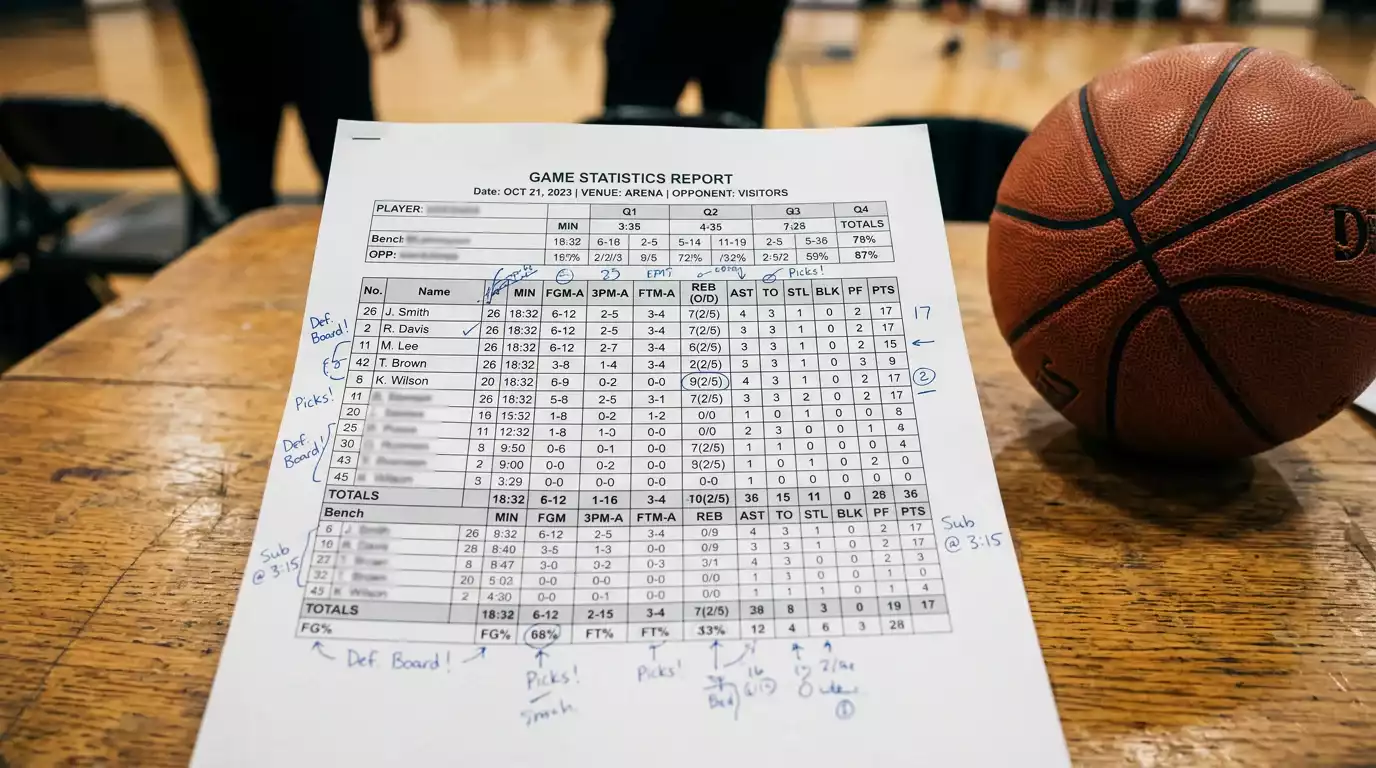
I keep notes on every pre-season game I watch. Not the score — the score is meaningless. The notes track lineup combinations, defensive schemes, and which players are operating with primary ball-handling responsibility. By the third pre-season game I usually have a clear read on whether a team’s projected starting five matches what the bookmakers’ models are using. When the lineup data diverges from the published projection, that is where my pre-season bets come from.
The cleanest example I can give from my own betting history involved a team in 2021 whose Championship odds opened at 14/1. Two pre-season games made it obvious that the head coach intended to run an entirely different offensive system from what summer reports had suggested — bench rotations were tighter, the power forward was being used as a primary creator rather than a finisher, and the projected starter at point guard was visibly out of role. The team’s actual ceiling was clearly higher than the 14/1 implied probability suggested. They reached the Conference Finals, the bet did not settle, but the price moved from 14/1 to 6/1 by Christmas. Selling the position to the next bettor would have been profitable; in this case I held and the price drifted back out as their season faded.
Tracking opening lines across UK operators
“The key to betting NBA futures is spotting value before the market shifts.” That principle applies most acutely to the pre-season window, when shifts happen quickly. The best practical setup I have used is monitoring three to five UK operators simultaneously during the second week of pre-season. Prices diverge most aggressively at this point, before the inter-operator pressure pulls them toward consensus.
I do not bet at the very first open. I wait until at least two pre-season games have been played, because the first wave of pricing is too speculative even for the bookmakers themselves. By the second week the prices have firmed up enough to react to early data, but they have not yet converged across operators. That is the window where line-shopping pays. The same player can be priced at 7/1, 9/1, and 11/1 across three major UK operators on the same morning, and the difference is not arbitrary — it reflects how different bookmakers’ algorithms are weighting different inputs.
The risk side of pre-season betting is that you are working from incomplete information by definition. October bets carry the longest exposure to injury risk, coaching dismissals, mid-season trades, and all the other variance that ante-post betting amplifies. The compensation for that risk is the looser pricing — and if the price is not visibly looser than it will be later, the bet is not worth placing in October. A 5/1 favourite in October that is also 5/1 favourite in February has produced no value for sitting eight months on your account.
One last note on the practicalities. Pre-season prices are also when individual operators have their highest stake limits. UK bookmakers cap futures stakes more aggressively as a market matures and the favourites become clearer. Larger stakes are more readily accepted in October than in February. For the broader analysis on how Win Totals lines specifically open and move during this window, the article at NBA win totals betting at UK bookmakers covers a market where pre-season pricing logic is particularly visible.
How far before the NBA season do UK bookmakers open futures markets?
Major UKGC-licensed operators typically open Championship and Conference markets in mid-September, roughly five to six weeks before regular-season tip-off. Individual award markets like MVP open around the same time, while smaller markets like MIP, DPOY, and 6MOY usually wait until late September or early October. The earliest bookmakers post Championship futures within days of the previous season’s Finals, but those very early prices are speculative and rarely worth betting until summer roster moves have settled.
Do pre-season NBA futures lines change after the draft or free agency?
Yes, but unevenly. The first major repricing happens in late June after the draft, when teams’ incoming rookie talent is factored in. The second wave comes through July free agency, when major roster moves trigger broad market resets. By August the prices stabilise as roster movement slows, and the lines remain reasonably stable until pre-season actually begins in early October, at which point new information from training camp can move prices again.
Published by the nba Futures Betting team.